
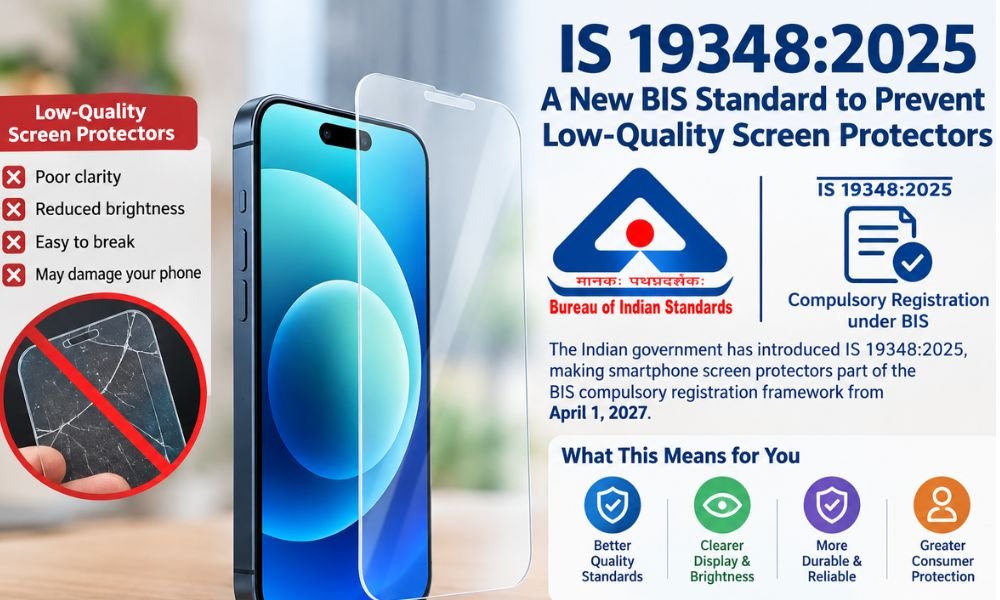
The Indian government is taking steps to improve the quality of smartphone accessories sold in the country. Under the new Bureau of Indian Standards (BIS) requirements, smartphone glass screen protectors will have to comply with IS 19348:2025 before they can be legally sold in India after the transition period.
The move is aimed at protecting consumers from products that do not meet prescribed quality standards and improving the overall quality of smartphone screen protectors available in the Indian market.
The new requirements are particularly important for manufacturers and importers because products that fail to meet the prescribed standards could no longer be legally sold once the compliance deadline arrives.
India Govt Is Banning Low-Quality Smartphone Screen Protectors
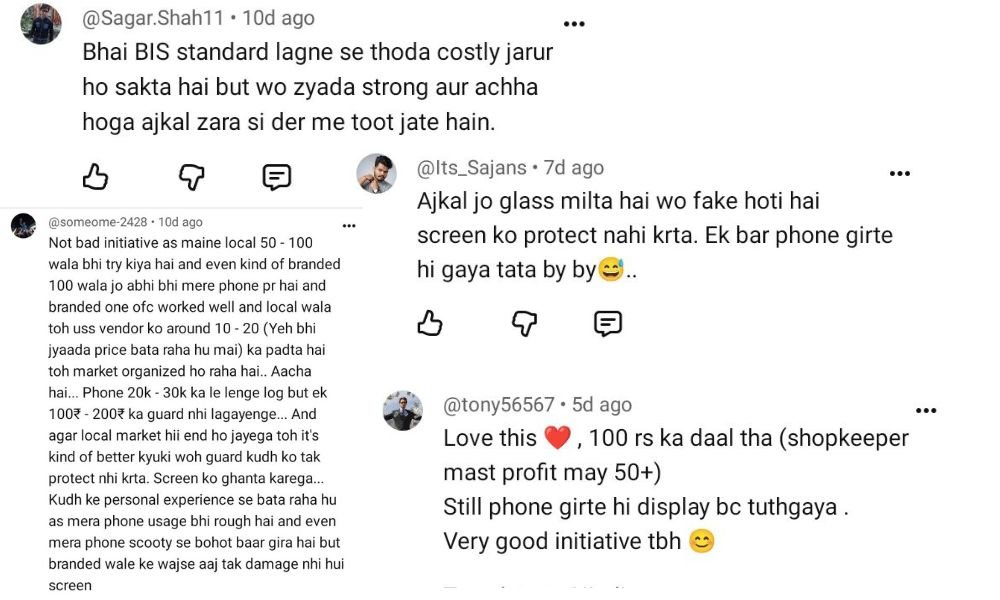
The India Govt is banning low-quality smartphone screen protectors in the sense that non-compliant products will not be permitted for sale after the applicable deadline. However, this does not mean that every inexpensive screen protector will be banned.
According to user opinions and reviews, the introduction of BIS standards for smartphone screen protectors could be better than relying on normal protectors. If a screen protector slips or fails to provide adequate protection, it may leave the display vulnerable to damage. There are also many fake or low-quality protectors available in the market, making it difficult for consumers to judge which products are genuine and reliable.
With BIS certification, consumers can more easily identify products that meet the required Indian quality and safety standards, making it easier to choose a reliable screen protector. Although it may be more expensive, it could offer better protection for your smartphone screen than a normal screen protector.
The key requirement is compliance with the relevant Indian Standard. A low-priced screen protector can continue to be sold if it meets the required quality and certification requirements.
The government has provided manufacturers and importers with a transition period until March 31, 2027. From April 1, 2027, the new requirements are expected to become applicable.
Therefore, consumers should understand the difference between a cheap product and a non-compliant product. The regulation focuses on whether a screen protector meets established quality requirements rather than simply how much it costs.
Why Is the Government Introducing This Rule?
Smartphone screen protectors are widely available through physical stores and online marketplaces. However, the quality of these products can vary significantly. Some inexpensive protectors may have poor transparency, weak glass, unreliable adhesive or coatings that do not perform as advertised.
Products that do not meet established quality standards can potentially provide less protection and may offer a poor user experience. It not only damages the screen protector but could also affect the phone display. The new BIS framework is intended to create greater consistency across the market. It can also make it easier for consumers to identify products that have undergone the required compliance process.
BIS Certification Is Compulsory for Screen Protectors
The new requirements make BIS certification compulsory for smartphone glass screen protectors covered by the standard. Manufacturers and importers will need to ensure that their products conform to IS 19348:2025 and meet the applicable BIS requirements before selling them in India after the compliance deadline.
This means businesses will need to pay closer attention to manufacturing quality, testing, documentation, labeling and packaging. Products that do not meet prescribed quality standards could face restrictions on sale once the new requirements come into force.
What Is 19348:2025?
IS 19348:2025 establishes requirements for smartphone glass screen protectors. The standard is designed to address several aspects of the product rather than focusing only on the basic strength of the glass.
Some of the areas covered include:
| Requirement | What It Covers |
|---|---|
| Glass quality | Size, strength and surface quality |
| Visual quality | Clarity and light transmission |
| Adhesive | Proper adhesion and durability |
| Protective properties | Anti-shatter and related protective features |
| Coatings | Oleophobic and anti-glare treatments |
| Special features | Privacy and blue-light filtering |
| Packaging | Manufacturer information, batch details and thickness |
These requirements are intended to improve consistency and reduce the number of sub-standard products reaching consumers.
Can the Government Ban Low Screen Protector Glass?
The phrase “ban low screen protector glass” can be misleading if it suggests that the government is banning all cheap or low-priced screen protectors. The actual focus is on products that fail to comply with the applicable quality requirements.
For example, if a ₹100 screen protector meets the required standard and obtains the necessary certification, its low price alone would not make it illegal. On the other hand, an expensive product could face restrictions if it fails to satisfy the applicable requirements. Therefore, consumers should focus on quality compliance rather than price alone.
Ban the Sale of Low-Quality Smartphone Screen Protectors in India From April 2027
The most important date for consumers and businesses is April 1, 2027. The transition period gives manufacturers and importers time to bring their products into compliance.
After the deadline, the ban on the sale of low-quality smartphone screen protectors in India from April 2027 approach will mean that covered products that fail to meet the required BIS standards cannot continue to be legally marketed and sold.
This could gradually remove many sub-standard products from the market. Consumers may therefore see more certified screen protectors across online marketplaces, mobile accessory stores and retail outlets.
How Will This Affect Consumers?
For consumers, the regulation could provide several benefits.
Better Product Quality
Buyers should have greater confidence that certified screen protectors meet defined requirements for glass quality, transparency and other characteristics. You may notice that low-quality screen protectors can cause air bubbles, make scrolling difficult, and lead to edge lifting. All these issues can affect the overall display experience. With this certification, these problems can be reduced by ensuring that screen protectors meet the required quality standards.
Improved Transparency
Packaging requirements can make it easier for consumers to identify the manufacturer and other important product information. Companies like Spigen, ZAGG, and Belkin offer screen protectors that meet BIS standards. They offer various types of screen protectors, so you can choose the one that best suits your needs.
Better Adhesive Performance
Standards covering adhesive properties could reduce problems such as peeling, poor attachment and premature failure.
More Reliable Protection
Requirements relating to glass strength and protective features could improve the overall reliability of screen protectors. Low-quality screen protectors can reduce screen brightness, clarity, and overall affect the display quality.
However, certification does not necessarily mean that a screen protector is completely unbreakable and safe to use. Consumers should still choose a product appropriate for their smartphone and use case.
Will Screen Protectors Become More Expensive?
The new requirements could have an effect on prices. Manufacturers and importers may have additional expenses related to testing, certification, compliance, packaging and quality control. Some businesses may pass these costs on to consumers.
As a result, certain screen protectors could become more expensive after the regulations take effect. A normal screen protector may cost around ₹50, while a standard-compliant protector can start at around ₹500 and go much higher. This price difference may make it difficult for some consumers to afford this is the biggest drawback.
However, increased compliance could also encourage manufacturers to compete on quality rather than simply offering the lowest possible price.
Impact on Imported Screen Protectors
The regulation could have a significant impact on imported smartphone accessories. Products entering the Indian market will need to comply with the applicable requirements if they are covered by the compulsory BIS framework. This could make it more difficult for manufacturers to sell inexpensive products that do not meet established quality standards.
The move could also encourage companies to increase domestic manufacturing and establish more reliable quality-control processes.
What Should Manufacturers and Importers Do?
Manufacturers and importers should not wait until the final deadline to begin compliance. They should review their existing products, determine whether they fall under the applicable standard, complete the required testing and certification process, and update packaging and documentation where necessary.
Businesses should also ensure that their supply chains are prepared before April 2027. Failing to comply could create problems for companies that continue to manufacture, import or sell covered products after the applicable deadline.
What Should Consumers Look For?
Consumers purchasing a smartphone screen protector after April 2027 should pay attention to certification and product information rather than choosing a product solely because it is inexpensive.
It is also worth checking the manufacturer’s details, product specifications and packaging information. The new rules could make certified products easier to distinguish from products that do not meet prescribed quality standards.
Final Verdict
India’s new BIS requirements for smartphone screen protectors represent a major change in the country’s mobile accessory market. The objective is not simply to ban low screen protector products because they are inexpensive, but to restrict products that fail to meet the required quality and compliance standards.
From April 1, 2027, manufacturers and importers will need to ensure that covered smartphone glass screen protectors comply with IS 19348:2025 and the applicable BIS requirements.
For consumers, the change could mean better-quality products, improved transparency and greater confidence when purchasing screen protection. For manufacturers and importers, however, BIS certification compulsory requirements mean that testing, documentation and quality control will become increasingly important.
Ultimately, the regulation could create a more standardized smartphone accessory market in India while reducing the availability of products that do not meet established quality standards.