
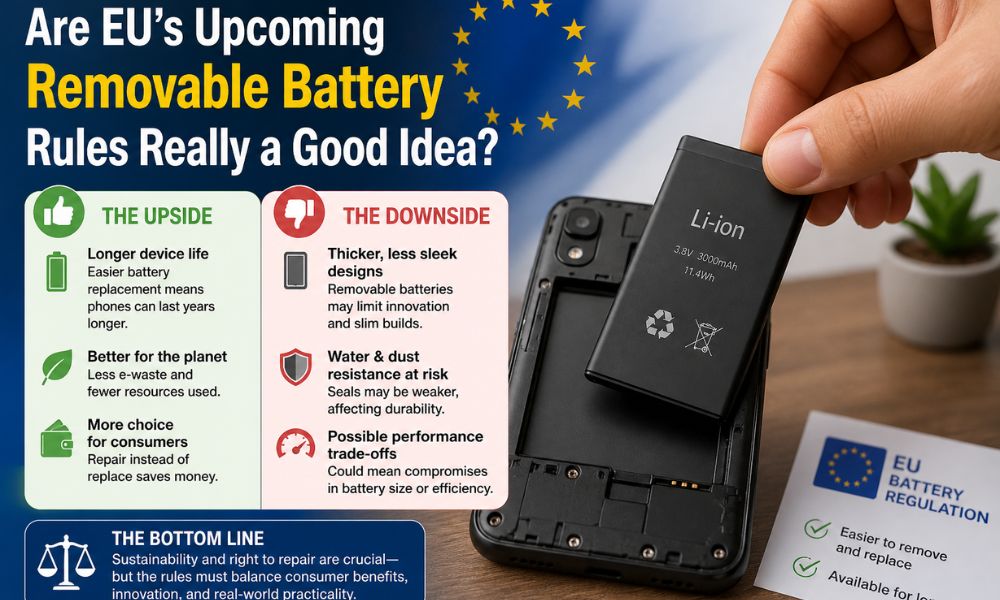
The European Union is implementing new regulations in February 2027 that will require all types of portable electronic devices and lightweight means of transport (LMTs) to have removable/replaceable batteries as part of an ongoing commitment to promote sustainability throughout the EU. The goal is to make products last longer, reduce the amount of e-waste produced by individuals, and facilitate the “right to repair” movement.
However, while this regulation is intended to be very beneficial to consumers, there are many practical issues that are already being discussed among manufacturers, consumers, and industry professionals.
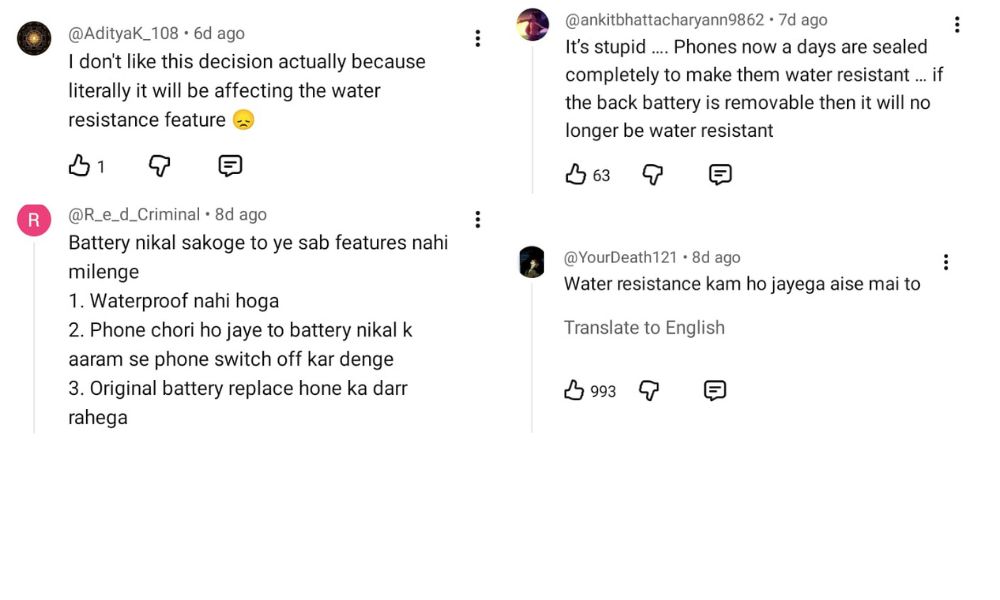
Although removable batteries will have many advantages when it comes to repairability, they will also likely reduce their durability, safety, and overall user experience. User reviews indicate concerns about reduced water resistance, risks of original batteries being replaced with counterfeit ones, and limitations in device tracking after battery removal, among other issues.
 1. Structural Integrity and Device Durability
Modern smartphones are engineered with sealed, unibody designs that enhance structural strength. These designs rely on tightly integrated components to maintain rigidity and resistance against bending or external pressure.
Introducing removable batteries changes this approach significantly. Devices will require:
- Additional seams, clips, or latching mechanisms
- Internal compartment divisions
- Reduced structural continuity
These changes can weaken the overall build quality. Devices—especially budget models—may become more prone to bending, creaking, or damage from drops. While premium brands may mitigate these issues with advanced materials, cost-sensitive devices could see noticeable compromises in durability.
2. Waterproofing and IP Rating Limitations
One of the biggest concerns is water and dust resistance. Today’s flagship smartphones commonly offer IP67 or IP68 ratings, made possible by sealed designs using adhesives, compression, and precision-engineered gaskets.
Removable batteries complicate this:
- Battery compartments must be accessible without specialized tools
- Seals like rubber gaskets or O-rings degrade over time
- Repeated opening and closing reduces effectiveness
Although manufacturers may attempt solutions such as double-gasket systems or protective coatings, these often increase device thickness and cost without fully restoring long-term waterproof reliability.
For users who rely on water-resistant devices, this could be a significant downgrade.
3. Impact on Battery Design and Innovation
Sealed battery systems allow manufacturers to optimize internal layouts. This includes:
- Larger battery capacities
- Dual-cell battery configurations
- Improved thermal management
- Slimmer device profiles
Removable battery designs impose physical constraints that limit these optimizations. As a result:
- Battery capacity may be reduced
- Heat dissipation may be less efficient
- Devices could become thicker or heavier
This may slow down innovation in battery technology and device engineering, particularly in high-performance smartphones.
4. Third-Party Battery Risks
One of the regulation’s goals is to make battery replacement easier and more accessible. However, this opens the door to increased use of third-party batteries.
While this improves affordability and availability, it also introduces risks:
- Low-quality or counterfeit batteries
- Improper voltage regulation
- Increased chances of overheating or swelling
- Potential fire hazards
In markets where regulation enforcement is weaker, substandard batteries could become widespread. This not only affects device performance but also raises serious safety concerns for users.
5. Consumer Experience and Cost Implications
Although the regulation promotes repairability, real-world usability may not be as simple as expected.
Some key challenges include:
- Repair instructions are encouraged but not strictly standardized
- Average users may still find battery replacement difficult
- Labor and service costs may remain high
Additionally, adapting global product designs to meet EU standards could increase manufacturing costs. Industry estimates suggest:
- Device prices could rise by 15–25% in budget segments
- Accessories and spare parts may also become more expensive
If replacement costs exceed a reasonable percentage of the device price, many users may still prefer buying a new device instead of repairing it—defeating the purpose of the regulation.
6. Limited Coverage and Regulatory Gaps
Interestingly, not all devices are equally affected. Certain categories, including some smartphones and tablets, may fall under separate
Eco design rules, allowing partial exemptions.
This creates inconsistencies:
- Some devices may remain sealed
- Others must comply with removable battery requirements
As a result, the overall impact of the regulation on everyday consumer electronics may be less uniform than expected.
7. Security and Theft Concerns
Another practical issue raised by users is device security. With removable batteries:
- A thief could power off a stolen phone instantly by removing the battery
- Tracking features like GPS or “Find My Device” may stop working
In sealed devices, even if powered off, some tracking features can still function temporarily. Removable batteries eliminate this advantage, potentially making stolen devices harder to recover.
8. Risk of Battery Replacement Fraud
Battery replacement also introduces a trust issue. Many users lack technical knowledge to distinguish between original and duplicate batteries.
This creates opportunities for:
- Unauthorized service centers installing counterfeit batteries
- Reduced performance and lifespan
- Increased safety risks
Without strict quality control and certification systems, consumers may unknowingly compromise their devices.
Conclusion
The EU’s removable battery mandate is rooted in strong environmental and consumer-rights principles. It aims to reduce e-waste, extend device lifespans, and empower users with repair options.
However, the transition is not without trade-offs.
In practice:
- Device durability and waterproofing may decline
- Battery innovation could face limitations
- Safety risks from third-party batteries may increase
- Costs could rise, particularly in budget segments
- Security and user trust issues may emerge
While the regulation moves the industry toward sustainability, its success will depend heavily on implementation, quality control, and consumer awareness.
Rather than being entirely “good” or “bad,” the mandate represents a complex shift—one that balances repairability with compromises in design, performance, and convenience.
FAQ
1. Do removable batteries affect water resistance?
Yes, removable batteries can reduce water resistance because maintaining a fully sealed structure becomes more difficult over time.
2. Will removable batteries change smartphone design?
Yes, devices may become slightly thicker or less compact due to structural and sealing requirements.
3. Will smartphone prices increase?
Potentially. Manufacturing changes and compliance with EU regulations may raise costs, especially in budget devices.
4. Can removable batteries improve phone tracking?
No, the opposite may happen. Removing the battery can disable tracking features instantly.
5. Do removable batteries reduce phone theft?
Not necessarily. In fact, they may make stolen phones harder to track if the battery is removed quickly.